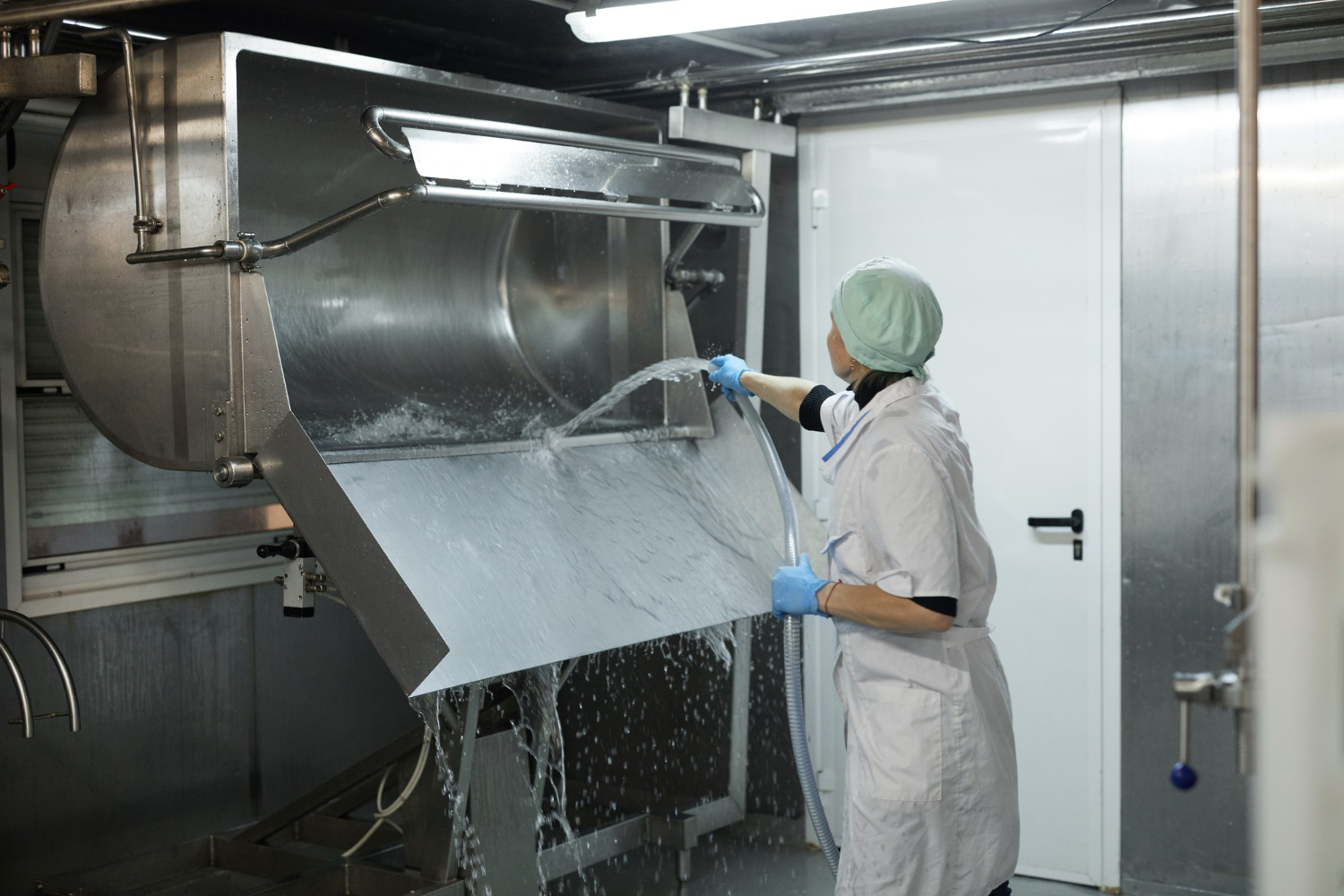
Learn a step-by-step method for thoroughly cleaning commercial stainless-steel extractor hoods and exhaust systems – to remove grease build-up, prevent fire hazards, and maintain optimal airflow in your kitchen.
In every high-traffic professional kitchen, the extraction and ventilation system runs around the clock to remove heat, steam, and cooking fumes. Over time, grease and particles accumulate on stainless-steel grease filters, air ducts, and fan blades — impairing airflow, increasing fire risk, and raising energy costs. Regular deep cleaning is therefore essential — not only for hygiene and safety reasons, but also to ensure your kitchen ventilation operates at maximum efficiency.
First switch off all cooking equipment and disconnect the exhaust fans from the power supply. Cover nearby work areas and floors with protective film to prevent splashes. Use a food-safe degreaser (pH-neutral, NSF-certified) and spray each grease filter. Allow the product to react for 10–15 minutes so that hardened grease can dissolve. Then scrub with a soft brush, especially in corners and weld seams where grease accumulates. Remove the filters and place them in a 60 °C hot water bath with an alkaline cleaning solution, agitating them regularly to loosen residue.
While the filters are soaking, open the access panels of the air ducts. Wear safety goggles and gloves and use a low-pressure steam cleaner (120 °C, 4 bar) to soften grease inside the ducts and around the fan housing. Then apply a stainless-steel-safe degreasing foam and let it act on vertical surfaces for maximum effectiveness. Use brushes with extension rods to reach deeper areas, and then rinse with a spray nozzle that collects dirty water in a catch container.
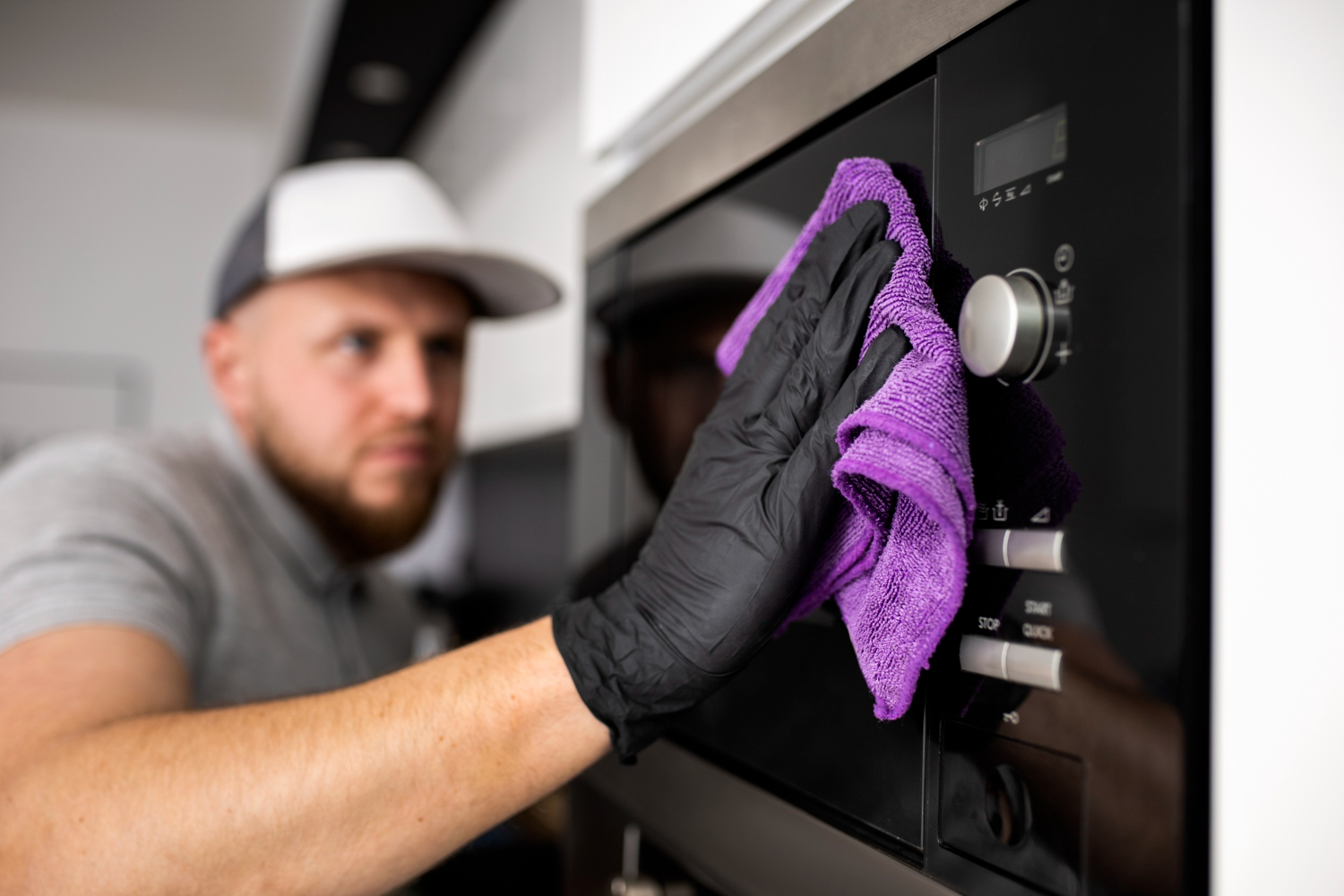
Next, focus on the fan unit. Remove the protective cover and spray the blades, hub, and motor housing with degreaser. Clean carefully with a non-metallic brush to avoid scratching chrome or painted surfaces. Rinse thoroughly and rotate the fan by hand to ensure it spins freely. Check the drive belts for cracks or hardening and replace them if necessary. Finally, wipe the entire interior of the hood with a microfiber cloth soaked in disinfectant — this prevents microbial buildup and ensures a streak-free finish.
The next section covers recommended cleaning intervals, inspection checklists, and guidance on choosing the right cleaning agents and equipment to extend the lifespan of your stainless-steel exhaust hood and ventilation system.
A robust maintenance plan for your exhaust hood and ventilation system includes drei Stufen:
- Daily Wiping: After service, use a microfiber cloth and a mild, food-safe degreaser to remove grease deposits from the inside and outside of the hood. This prevents buildup between deep-cleaning cycles.
- Monthly Filter and Fan Inspection: Remove the grease filters and check them for cracks or deformation. Clean them as described above. Slowly turn the exhaust fan by hand to detect unusual resistance or noises. Tighten the protective grid screws and check the belt tension; adjust according to the manufacturer’s specifications if necessary.
- Quarterly Deep Cleaning and Inspection: Hire a professional hood-cleaning service to perform a complete hot-water high-pressure cleaning of the ducts and fan housings, followed by a visual inspection of weld seams, access openings and fire-suppression nozzles. Replace corroded fasteners and reapply heat-resistant sealants as needed.
When choosing cleaning agents, use NSF A1/A2 degreasers and pH-neutral stainless-steel disinfectants to prevent etching damage or discoloration. Use stainless-safe brushes (nylon or plastic) and avoid wire brushes on polished surfaces. A steam cleaner approved for food environments replaces aggressive solvents in the ducts, reducing the risk of chemical residues.
Finally, keep a detailed cleaning log: date, staff, scope of work and observations (loose screws, unusual wear). This documentation supports compliance with fire-safety and hygiene regulations and helps track the life cycle of the components. By following these guidelines – daily wiping, monthly inspection and quarterly deep cleaning – you ensure optimal airflow, minimize fire hazards and extend the service life of your stainless-steel exhaust hood and exhaust system.